
Filler Materials From Hyaluronic Acid to Poly-L-Lactic Acid
The smallest sign on a filler label is the name of the material, because it says what the product is made of. This note follows that name through two sources.
Three materials on one agency list
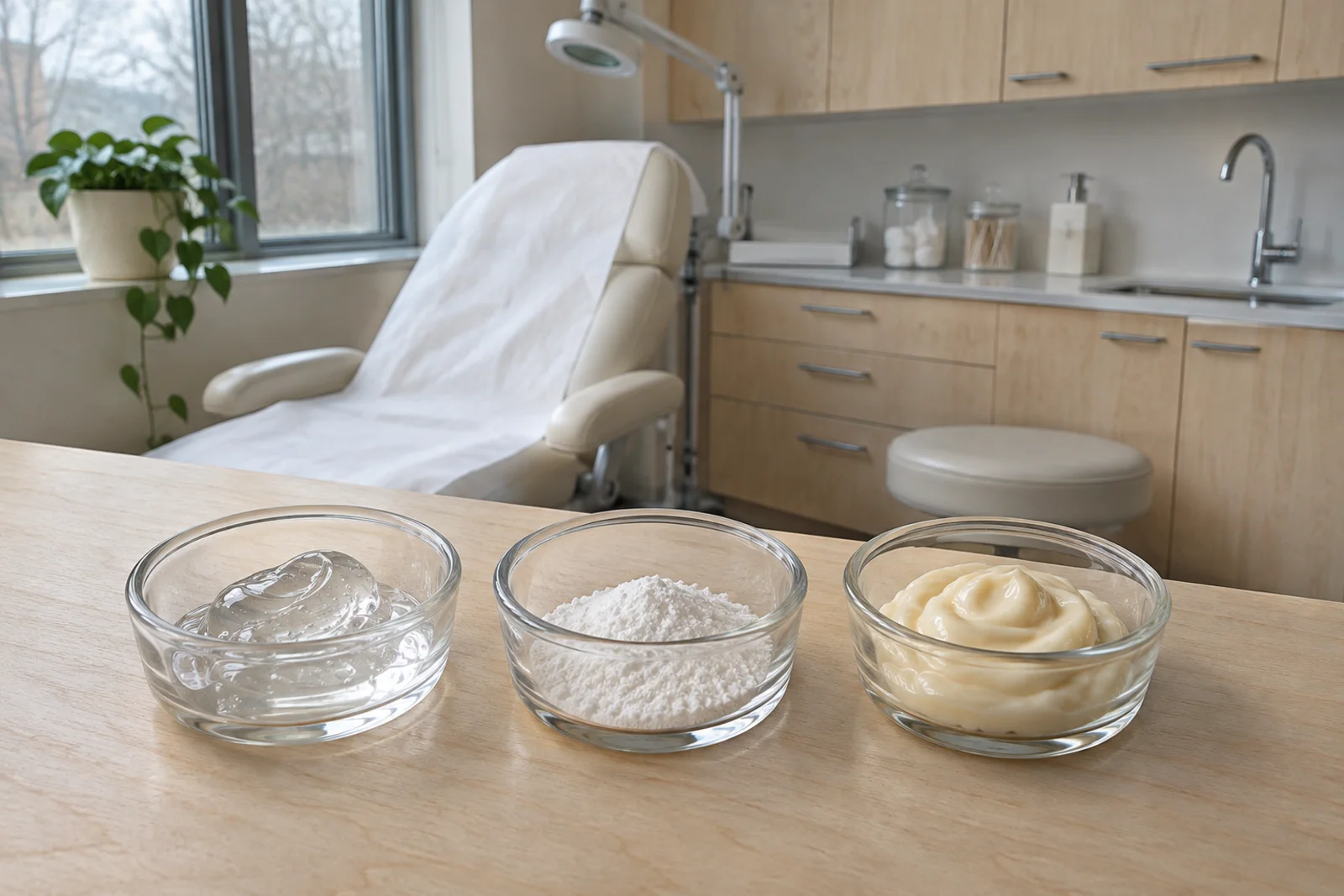
The U.S. Food and Drug Administration lists temporary fillers as including hyaluronic acid, a sugar that is naturally found in the body, calcium hydroxylapatite, a mineral and a major component of bone, and poly-L-lactic acid (PLLA), a biodegradable, synthetic material.
For a wider starting point, the American Society of Plastic Surgeons page on dermal fillers covers the procedure itself.
The one that is not absorbed
The agency also states that there is only one FDA-approved dermal filler that is not absorbed by the body. The word temporary in the list above is worth reading closely for that reason.
How fillers differ from Botox
Cleveland Clinic notes that while Botox is made from botulinum toxin, dermal fillers are made from other natural or synthetic materials, including collagen, hyaluronic acid or calcium hydroxylapatite. The two sources overlap on hyaluronic acid and calcium hydroxylapatite.
What the lists confirm and what they leave open
Both lists confirm what fillers can be made of. Neither says which material a given syringe holds, so a reader should not assume it from the brand or the price.
The first check for today
Before an appointment in New Providence, ask for the name of the material in the syringe and write it down. Match it against the lists above. Readers who want to read further on risks can start with the American Academy of Dermatology article on the risks of needle-free fillers and the American Society of Plastic Surgeons blog on getting injectables without looking overdone.